A Friendship Like No Other: Homily for the 13th Sunday in Ordinary Time – Year A
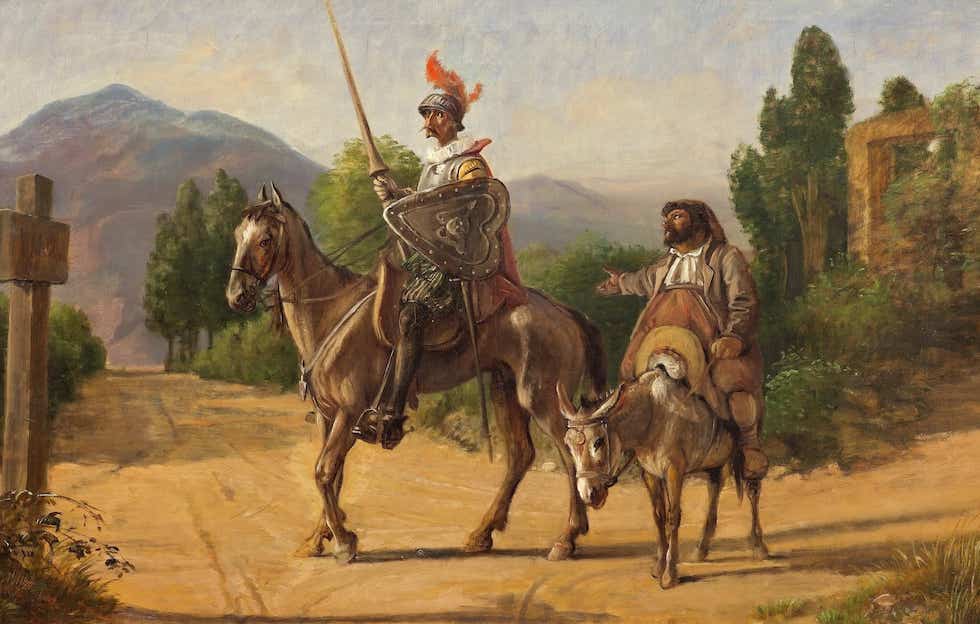
One of the funniest and most famous scenes in all of literature
comes near the beginning of the novel Don Quixote.
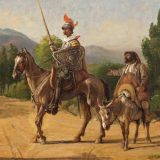
Don Quixote and his faithful companion, Sancho Panza,
are riding across the plains of Spain,
a knight and his squire,
out to right wrongs and protect the vulnerable.
Suddenly Don Quixote points into the distance.
“Look there!” he cries. “Monstrous giants!”
Sancho squints into the sun.
“Giants? Those aren’t giants. Those are windmills.”
But Don Quixote is convinced.
He lowers his lance, charges across the field,
and is promptly knocked head over heels off his horse
by one of the windmill’s rotating sails.
We can imagine poor Sancho
helping his bruised and battered friend back onto his horse,
shaking his head and wondering,
“Why in the world did I ever decide to travel
with this impossible old man?”
It’s a famously funny scene,
but it’s also the beginning of one of the greatest friendships in literature.
That friendship came to mind when I read today’s Gospel.
Because Jesus says something that can sound almost impossible:
“Whoever loves father or mother more than me is not worthy of me,
and whoever loves son or daughter more than me is not worthy of me.”
Those are strong words, and they can be hard to make sense of.
Is Jesus really asking us to love him more than our families?
Doesn’t that seem to contradict everything else we’ve been taught
about honoring our parents and loving our neighbors?
But I think the key to understanding this line
is found in a single Greek word that gets translated as “love.”
In English we use the word “love” for lots of different purposes:
We love pizza, and baseball, and music.
But we also love our spouses, our children, our friends.
Those are very different kinds of love.
The New Testament was written in Greek,
and the Greek language actually has several different words
for the several different kinds of love.
The Greek word for love that we may have heard before is agape—
God’s self-giving, sacrificial love.
We often hear that in the context of Scripture.
“God is love,” says the first letter of John.
“Beloved, let us love one another, because love is of God;
everyone who loves is begotten by God and knows God.
Whoever is without love does not know God, for God is love.”
The word for love in that passage is agape – God’s self-sacrificial love.
But that’s not the word for love used in today’s Gospel.
Instead, Matthew uses the Greek verb phileō,
which means ‘to love as a friend,’ ‘to cherish,’ or ‘to be fond of.’
It’s the same family of words that gives us “Philadelphia”—
the City of Brotherly Love.
Today Jesus is speaking about friendship.
He is saying, in effect,
“Whoever prefers the friendship of father or mother to my friendship…”
“Whoever prefers the friendship of son or daughter to my friendship…”
This Gospel reading is less about what Jesus demands from us
than about what Jesus desires for us:
a friendship so deep that every other love finds its proper place.
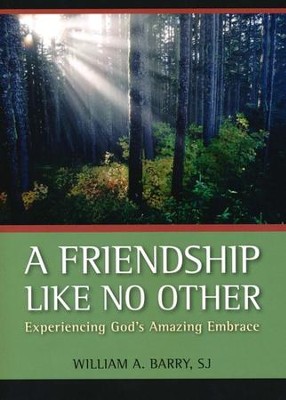 The spiritual writer Fr. William Barry spent much of his life
reflecting on prayer as friendship with God.
He believed the deepest question of prayer isn’t,
“What do I want from God?”
The deeper question is:
“What does God want?”
And Barry’s answer is remarkably simple.
God wants our friendship.
Sometimes we imagine that what God wants most is our obedience.
Or our worship.
Or our moral improvement.
Certainly those things matter.
But before all of those, God desires relationship.
Jesus doesn’t simply want followers.
He wants friends.
That is exactly what he tells the disciples at the Last Supper:
“I no longer call you servants… I have called you friends.”
Friendship has a remarkable power.
The people we spend our lives with slowly shape us.
We begin to laugh at the same things.
We borrow one another’s expressions.
We begin to care about the things our friends care about.
Not because we lose ourselves.
But because friendship transforms us.
That is exactly what happens to Sancho Panza.
At the beginning of the novel, he is the practical one.
He rolls his eyes at Don Quixote’s impossible dreams.
He sees windmills where Don Quixote sees giants.
He sees dusty roads where Don Quixote sees glorious adventures.
He spends much of the story trying to bring his friend back to reality.
But something quietly happens over the course of their years together.
Without even noticing it,
Sancho begins to see the world through his friend’s eyes.
He starts speaking Don Quixote’s language.
He becomes more generous.
More hopeful.
More willing to believe that the world might be larger and more beautiful
than he once imagined.
The greatest gift Don Quixote gives Sancho isn’t wealth or success.
It’s a new way of seeing.
William Barry would say that this is exactly what happens
in friendship with Christ.
Prayer isn’t simply reciting words.
Prayer is spending time with someone.
Someone who already loves us.
Someone who delights in us.
Someone who wants to share his life with us.
Sometimes prayer is beautiful.
Sometimes it feels dry.
But think about your oldest friendships.
Not every conversation is profound.
Not every visit changes your life.
Friendship isn’t built on extraordinary moments.
It is built by showing up.
Again and again.
Jesus doesn’t ask us to admire him from a distance.
He asks us to travel with him.
Every time we open the Scriptures…
Every time we receive the Eucharist…
Every time we spend a few quiet minutes in prayer…
Jesus is saying,
“Walk with me a little farther.”
And if we keep walking with him, something begins to happen.
Little by little, almost without realizing it,
we begin to dream Christ’s dreams.
We notice people we once ignored.
We forgive people we never thought we could forgive.
We become more patient.
More merciful.
More generous.
Jesus’ heart slowly becomes our heart.
That is why today’s Gospel is not asking us to love our families less.
It is inviting us to love Christ so deeply
that his friendship becomes the center
from which every other relationship flows.
What Jesus is saying today is:
the single most important friendship of our lives
is friendship with Him,
and without it we may as well not even call ourselves his disciples.
Because friendship with Christ doesn’t compete with human love.
It perfects it.
It enlarges it.
It teaches us how to love.
Near the end of Don Quixote, there is another unforgettable scene.
The old knight has come home.
His adventures are over.
He is dying.
His dreams seem to have ended.
And suddenly something unexpected happens.
The practical Sancho—
the same Sancho who once insisted that windmills were only windmills—
is now the one pleading with his old friend not to give up.
“Come,” he says. “Let’s go back out into the countryside.
Let’s have one more adventure.”
Somewhere along the journey,
Sancho had begun to dream his friend’s dreams.
That is what friendship had done.
Not because Don Quixote forced him.
Not because he argued him into it.
Simply because they had walked together for so long.
That, I think, is what Jesus is talking about today.
He is not asking us to admire him from afar.
He is inviting us to walk beside him, day by day, moment by moment.
To let his friendship quietly shape the way we see everything else.
And perhaps that leaves us with one simple question.
Not first,
“Do I believe in Jesus?”
Not even,
“Do I love Jesus?”
But,
“Am I becoming his friend?”
Because if we keep walking with him…
if we keep praying…
if we keep listening…
if we keep returning to this table…
then one day we may discover that,
almost without noticing it,
we have begun to dream Christ’s dreams.
And when that happens,
every other love in our lives will have found its proper place.