Good News, Bad News, Who Can Say? – Homily for Gaudete Sunday
Today is Gaudete Sunday, Rejoice Sunday.
We light the rose colored candle.
We hear words like rejoice and be glad.
And yet, maybe many of us arrive here a little tired.
Advent days are dark. The world is loud.
This season that’s supposed to be joyful
is often when things feel the heaviest, the most stressful.
Which makes today’s readings comforting.
Because every one of them speaks to us right where we are.
Not to people who have it all figured out,
not to people whose lives are all put together and perfect;
but to people who are waiting, struggling,
and wondering how God really is at work in our lives.
Isaiah is speaking to a weary people in exile
who have been disappointed too many times.
The Israelites are in Babylon,
uprooted from their homes,
900 miles away from the Promised Land,
wondering why this is happening to them.
James writes to a suffering community under strain,
and says—not “be cheerful,” but be patient.
And John the Baptist, Advent’s great prophet,
is sitting in prison with time to think—and doubt.
John sends messengers to Jesus with a very human question:
“Are you the one who is to come, or should we look for another?”
This is not a casual question.
This is the question of someone who worked tirelessly for God—
and now finds himself imprisoned,
and unsure of what has happened to him.
And I think that’s where many of us live,
as we look at the events of our lives.
There’s an old story that captures this experience perfectly.
It’s something I use with my freshman Old Testament classes,
and it goes like this:
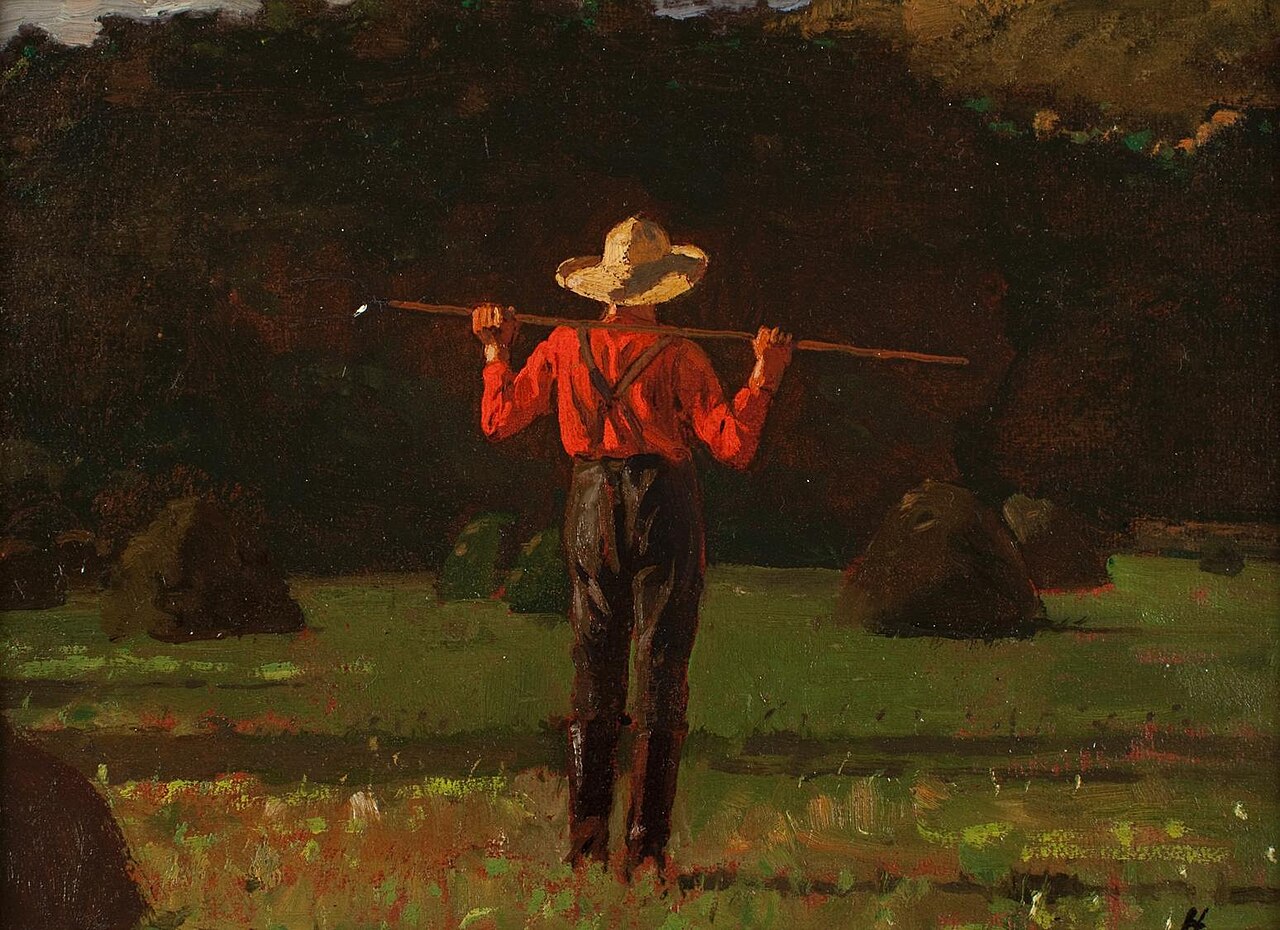
There once was a wise old farmer who owned a horse.
That horse was his entire livelihood.
One day, the horse escaped its corral and fled into the hills.
“Bad news,” his neighbors said.
“Bad news, good news—who can say?” the wise old farmer replied.
The next day, the horse returned, leading back ten wild horses.
“Good news!” the neighbors said.
“Good news, bad news—who can say?” the wise old farmer replied.
The next day, the farmer’s son was thrown by one of the wild horses,
and broke his leg.
“Bad news!” the neighbors said.
“Bad news, good news—who can say?” the wise old farmer replied.
The next day an enemy attacked the village
and took away all the able-bodied men.
The old farmer’s injured son was left behind.
This time the neighbors said nothing.
This story reminds us that we don’t see the whole arc of our life
as we’re living it,
and we do not know how everything turns out.
The Advent Scriptures are full of these moments.
Think about Zechariah, who hears from an angel
that he and Elizabeth will have a child in their old age. Good news!
But then he is struck mute. Bad news.
Or think of Joseph, excited about his engagement to Mary. Good news!
Then he hears that she is pregnant.
Bad news.
Then he finds out that she has been chosen as mother of the Messiah.
Good news!
John the Baptist himself is in a similar situation today.
He has prepared the way for the Messiah.
He preached courageously. He baptized Jesus. Good news!
And where does that faithfulness lead him?
A prison cell. Bad news.
From there, John asks himself:
Did I misunderstand the story?
Did I think this was good news,
only to have it turn out to be bad news?
He can’t say.
He recognizes that he does not have the perspective
to know how this will all turn out.
So he turns to Jesus and asks him,
“Are you the one who is to come, or should we look for another?”
Jesus doesn’t answer John with explanations, but offers signs:
The blind regain sight.
The lame walk.
The poor hear good news.
In other words: yes, God is working—
but not according to our timelines
or our expectations.
Good news, bad news—who can say?
That’s also what the letter of James says to us today:
“Be patient, brothers and sisters, until the coming of the Lord.”
Patient doesn’t mean passive.
It means trusting that God is at work even when outcomes are unclear.
Patience says, “I don’t yet know what this will mean.”
Patience says, “I will not rush to despair—or false certainty.”
That’s deeply countercultural.
We live in a world that demands instant judgments and quick conclusions.
Advent trains us differently.
It teaches us how to live in the middle.
In the space where we don’t yet know
whether something will turn out the way we hoped—or not at all.
In the space where faith is less about answers and more about trust.
This is why Gaudete Sunday matters.
We rejoice—not because everything is resolved—
but because God is faithful in our unresolved places.
The prophet Isaiah doesn’t promise immediate relief.
He promises strength for feeble hands and firmness for knocking knees.
He promises that God comes—not always quickly, but always truly.
Some of us, maybe most of us,
are carrying questions this Advent that have no quick answers.
We’re waiting for clarity.
We’re waiting for healing.
We’re waiting for reconciliation.
We’re waiting for something to make sense.
And the wisdom of Scripture today is very gentle, but very clear.
It says: Stay awake. Stay faithful. Stay patient.
God’s story with you is not finished yet.
And that’s why Gaudete joy is quieter than Christmas joy.
It’s the joy of someone who knows that God is near—
even when they can’t see the ending.
It’s the joy of trusting in the slow work of God.
Jesus is our model of patient trust.
The Son of God came into this world. Good news!
He was put to death on the cross. Bad news.
But he rose again on the third day. Good news!
In just a few moments,
we will come forward to receive Christ in the Eucharist—
hidden and humble.
He is the same One who comes into our unfinished stories.
When we leave this church today and face the week ahead—
with its mix of reliefs and disappointments—
let this be enough to help us rejoice on this Gaudete Sunday.
Not because everything is perfect,
and not because we have all the answers,
but because God is at work in every chapter of our story.
We rejoice because the Lord is close.
We rejoice because Christ is already healing,
already coming, already saving.
We rejoice because the deepest truth of our lives is not our hardships,
but God’s faithfulness in the middle of them.
So maybe this week, when life brings us something unexpected—
something that feels wonderful, or terrible, or confusing—
maybe we can pause and whisper a little Advent prayer:
“Good news, bad news…
Lord, only You can say.”